




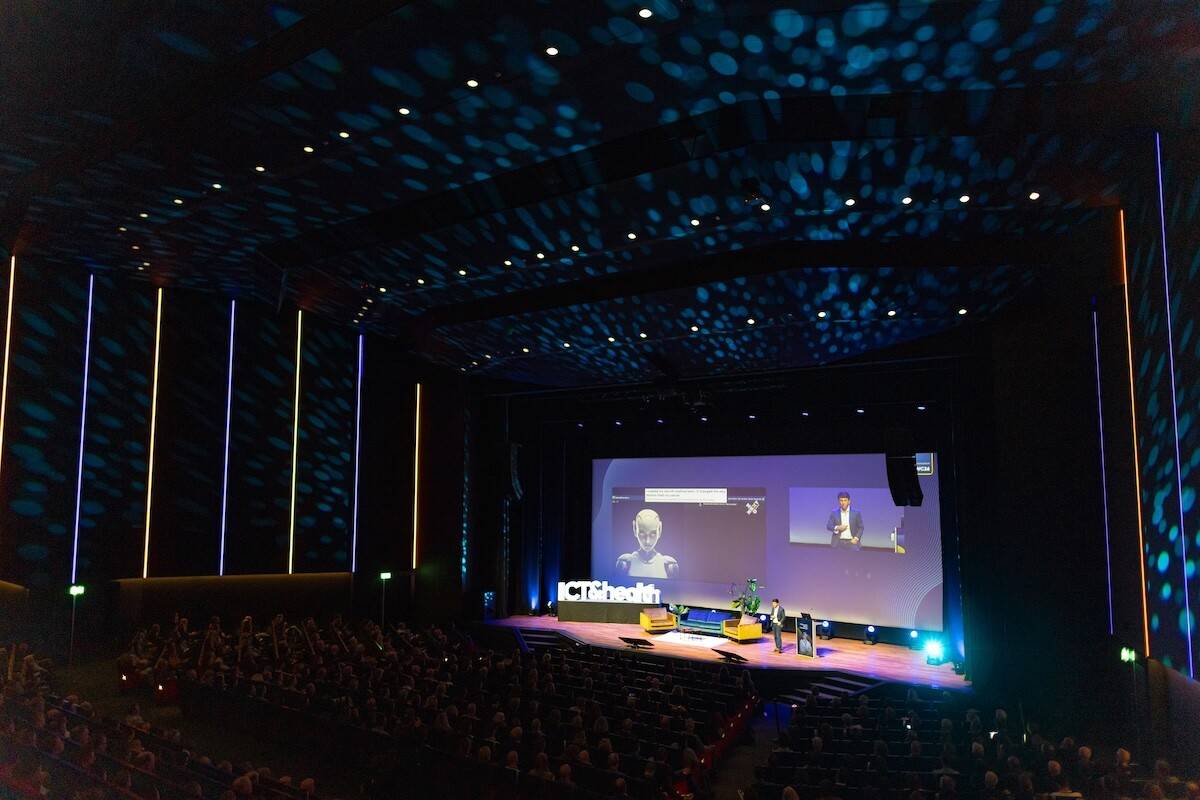
The first day of the ICT&health World Conference 2026 brought the MECC Maastricht into full swing. Thousands of healthcare professionals, administrators, policymakers and innovators came together at a time when the future of healthcare is no longer abstract, but is visibly unfolding. Digital healthcare, data and AI are no longer promises for the future, but technologies that are already making a difference today. Day one showed that real progress requires leadership, collaboration and sharp choices.
That tone was set from the start, not only in the keynotes, but also in the discussions. In addition to visionary contributions, the programme provided space for dialogue and reflection, with a high-quality fireside chat in which healthcare, technology and life sciences came together around the question of how innovation can be accelerated responsibly and at scale.
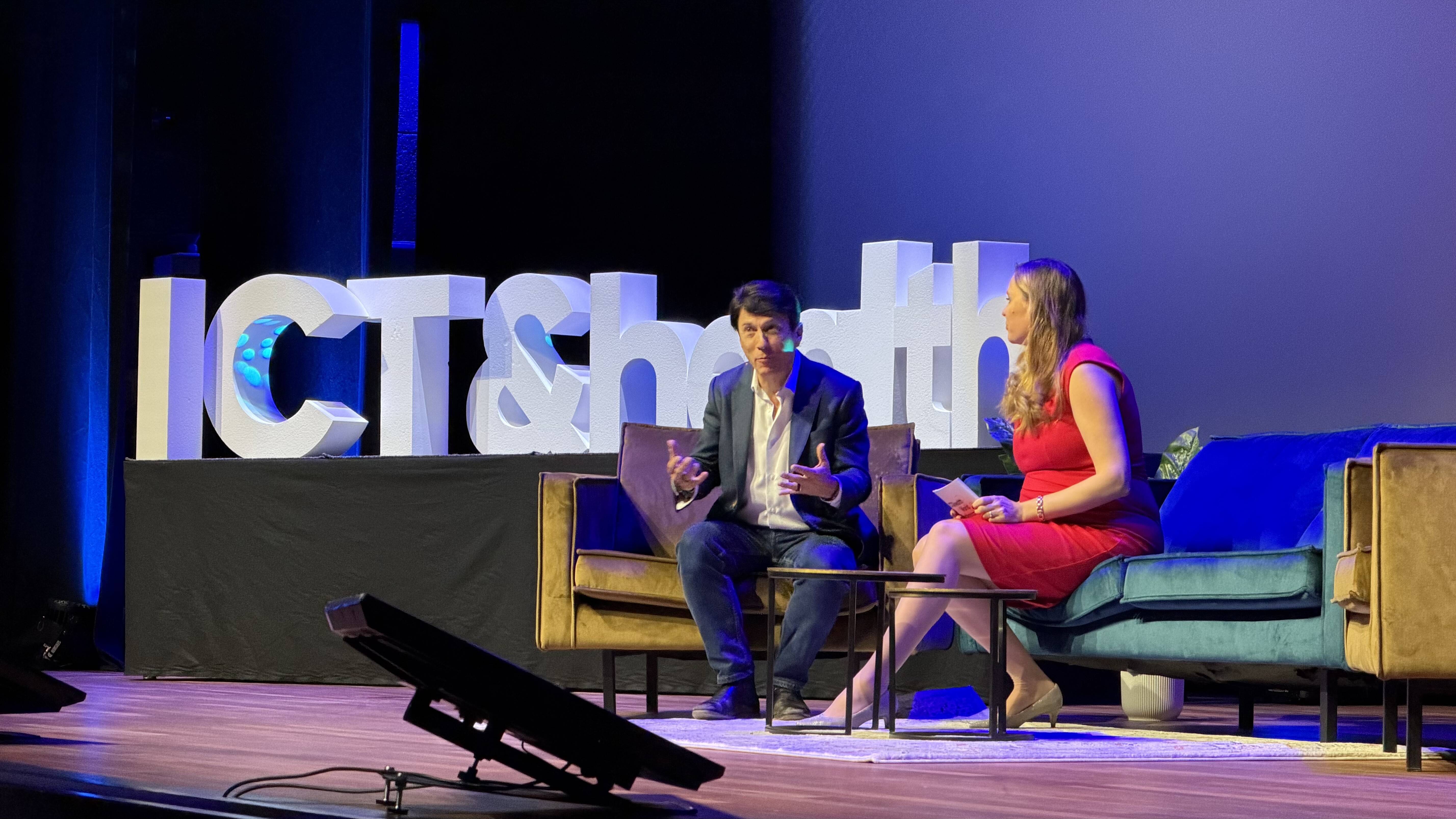
Chair Sunnie Groeneveld opened the conference with a clear message. Maastricht, in particular, offers space to experiment, be curious and have conversations that often remain unaddressed in everyday healthcare practice. The focus was not on working flawlessly, but on jointly exploring what is needed to make healthcare future-proof.
Natural cooperation
This broader social context was reinforced by Emile Roemer, Governor of Limburg. He emphatically positioned Limburg as a European region where cooperation is a matter of course. According to Roemer, Maastricht's cross-border location is not a coincidence, but a strength. This is certainly true in healthcare, where challenges do not stop at national borders and solutions are only sustainable when parties are able to find each other.
The urgency of this cooperation was clearly highlighted in Bianca Rouwenhorst's contribution. She outlined the paradox of healthcare. Information is crucial, but often too late, incomplete or unavailable. While other sectors have undergone extensive digitisation, healthcare lags behind, precisely where it concerns health and life. Digitalisation is therefore not a luxury, but a prerequisite. The next phase does not call for new plans, but for action, upscaling and making visible how policy actually lands in the workplace.
In his keynote speech, Daniel Kraft took the audience on a journey through fifteen years of medical innovation. The number of medical apps has grown from 15,000 to more than 400,000, but according to Kraft, the real acceleration is not in technology alone. Without the right mindset, progress will stall. AI will not replace healthcare professionals, but will enhance their skills and accelerate the shift from reactive care to continuous, proactive health.
From vision to reality in conversation
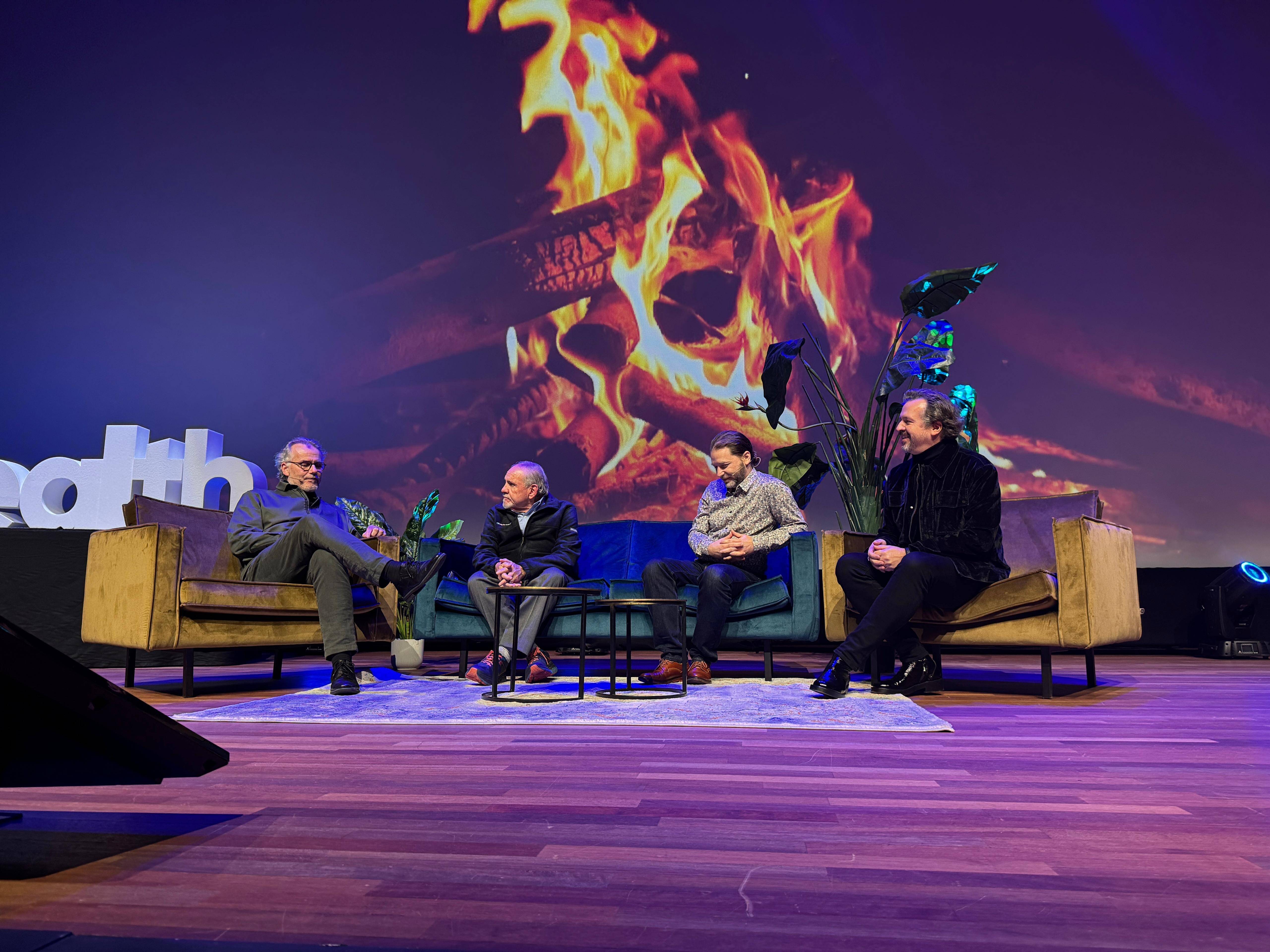
An important substantive anchor point on day one was the fireside chat, moderated by Lucien Engelen. Seated at the table were Daniel Kraft, Larry Brilliant, Jack Kreindler and Jan Liska. In this intimate conversation, leaders from healthcare, technology and life sciences came together around one of the most pressing questions for healthcare systems worldwide.
How can AI, data and personalised medicine be accelerated responsibly, applied at scale and, at the same time, maintain lasting trust? Drawing on experience in public health, digital innovation, clinical practice and the pharmaceutical sector, the conversation shifted the focus from vision to implementation. The focus was not on the promise, but on the strategic choices that healthcare leaders must make today to remain future-proof, and the need for cross-sector collaboration to make that possible.
Closing day one: wisdom, humanity and leadership
The first day of the conference concluded with two keynotes that brought together vision, experience and humanity. Esther Talboom-Kamp, board member of Zuyderland and professor of Digital Home Care, kicked off the closing session with a sharp and personal argument based on Dutch healthcare practice. With her well-known “fuck-it list”, she argued for the elimination of bureaucracy, a return to focus and the organisation of care around people rather than systems. Real progress, she argued, starts with humanity, trust and smarter organisation, not with technology alone.
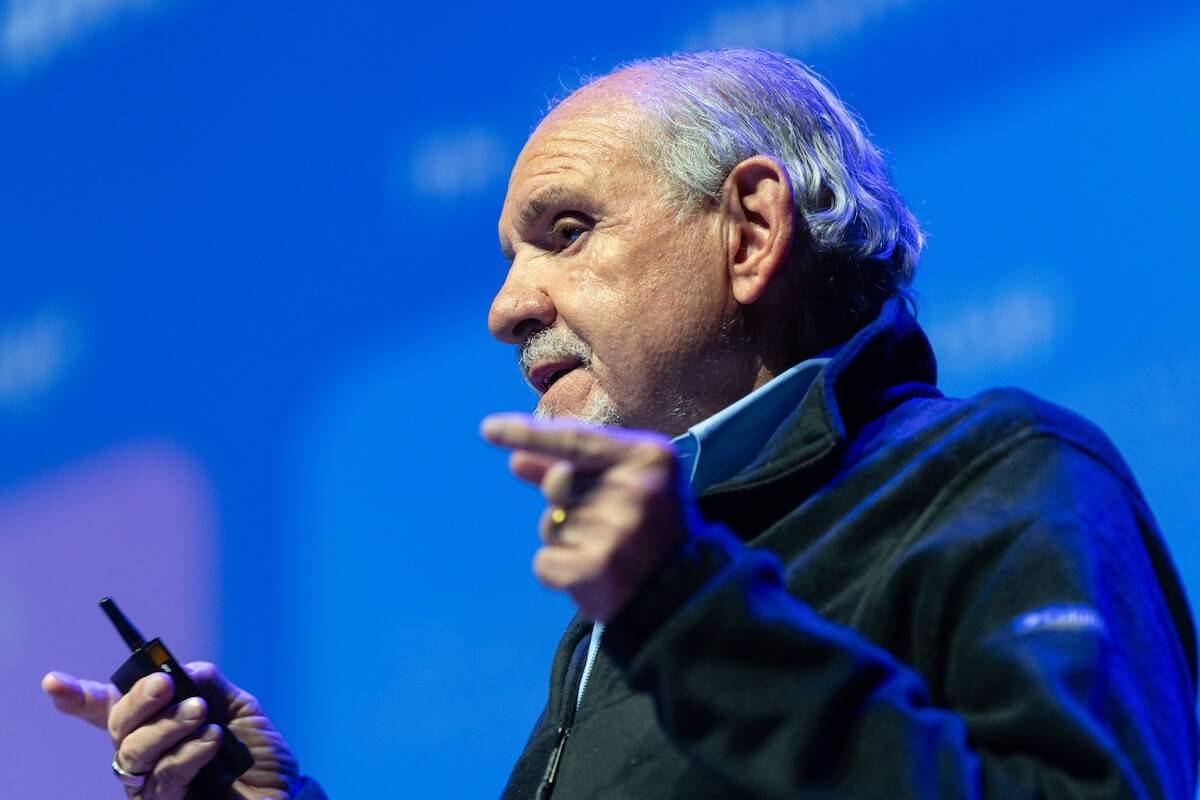
Larry Brilliant then took the audience on a journey through his extraordinary career, from the global eradication of smallpox to his role in global health innovation. He spoke about leadership, foresight and collective responsibility, making it clear that major health problems can be solved when people decide that they must be solved. Progress happens when healthcare professionals take responsibility and when companies enable and scale up solutions.
Together, these keynotes formed a powerful and inspiring finale to day one. Global wisdom and everyday healthcare practice came together in a conclusion that not only challenged and energised, but also served as a sharp reminder of what healthcare transformation is ultimately about: people.
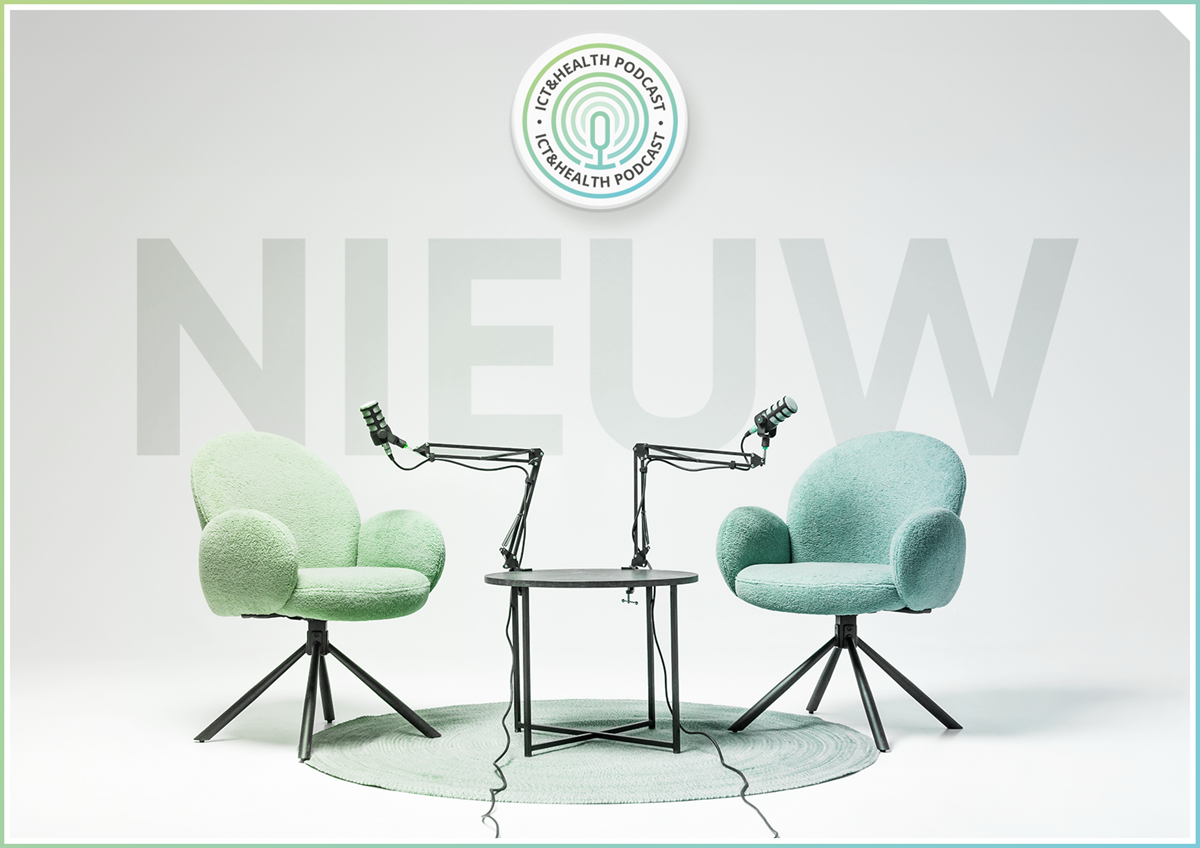
In addition to the keynotes and in-depth discussions, day one also marked the official launch of the ICT&health Podcast. With this podcast series, ICT&health is explicitly extending the conference beyond the stage, with room for reflection, interpretation and in-depth discussion. The podcast is hosted by Lucien Engelen and Jessica Workum, who both draw on their own expertise to engage in conversation with healthcare leaders, innovators and policymakers.
The first episodes were recorded during the first day of the conference, with guests who also appeared on stage at the ICT&health World Conference. These conversations focus not on the format, but on the content. What do AI, data and digital healthcare mean in concrete terms for professionals in practice? What choices must administrators make today to keep healthcare organisations future-proof? And how do technological possibilities relate to trust, humanity and responsibility in healthcare?
The ICT&health Podcast thus forms a substantive extension of the conference programme. Where the stage provides direction, the podcast offers space for nuance, doubt and personal reflection. The first episodes will be released shortly and will give listeners an insight into the conversations that will determine the further transformation of healthcare in the coming years.
Preview of day two: from vision to practice
On Wednesday 28 January, the ICT&health World Conference will build on this directly. The day starts at 09:30 with the keynotes. All participants are expressly requested to be present in the room by 09:15 at the latest, so that the programme can start on time.
On Wednesday 28 January, the ICT&health World Conference will build directly on this. The day starts at 9:30 a.m. with the keynotes. All participants are urgently requested to be present in the room by 9:15 a.m. at the latest, so that the programme can start on time.
Jan Anthonie Bruijn, Minister of Health, Welfare and Sport, will open the morning with a keynote speech on digital transformation, administrative courage and cooperation. Jack Kreindler will then share his vision on redesigning healthcare, followed by Helen Mertens, who will show how academic hospitals can play a pioneering role in sustainable healthcare transformation and regional cooperation.
The second day of the conference will conclude with two international keynotes focusing on the patient and digital trust. Mohammad Al-Ubaydli, CEO of Patients Know Best, will show how patient-centred platforms and data ownership are fundamentally changing the relationship between patients and healthcare providers. Liz Ashall Payne, founder and CEO of ORCHA, will discuss the importance of trust, quality and validation of digital healthcare solutions for real impact and upscaling within healthcare systems.
Together, these contributions mark a powerful end to day two, making it clear that the future of healthcare begins with well-informed patients and reliable digital innovation.
The ICT&health World Conference 2026 runs until Thursday 29 January.

Add ICT&health on Google
Show more content from ICT&health in Google Search.


