

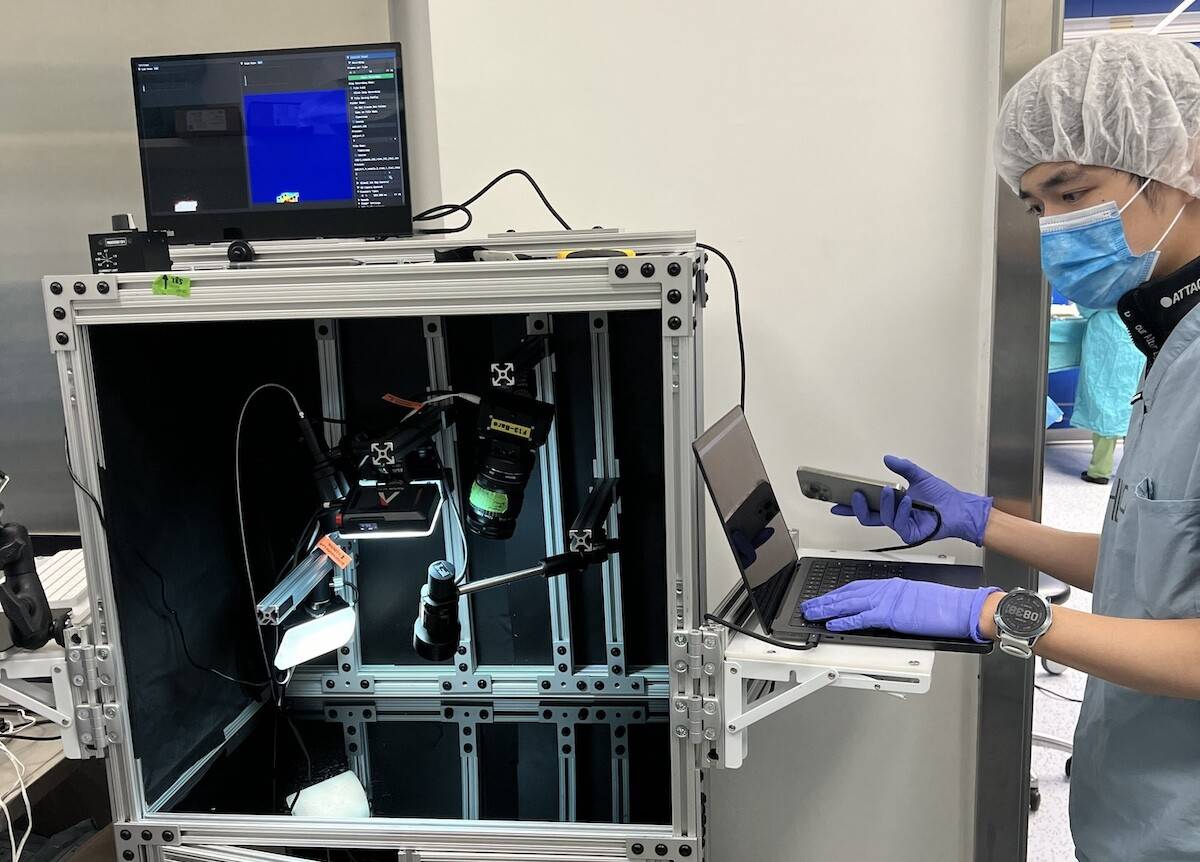
Researchers at the University of Illinois at Urbana-Champaign have developed a compact, shrimp-inspired imaging system that could significantly improve cancer surgery. The camera captures ultraviolet (UV), visible and near-infrared (NIR) images simultaneously using a single chip, enabling surgeons to both locate lymph nodes and assess whether they contain cancer, directly during an operation.
The technology, described in Optica, addresses a longstanding clinical challenge. While existing tools can map lymphatic drainage, they cannot reliably determine whether a lymph node is cancerous in real time. This uncertainty can lead to unnecessary removal of healthy nodes or missed metastases, sometimes requiring additional surgery.
Inspired by the mantis shrimp
The innovation draws inspiration from the mantis shrimp, a crustacean known for its exceptional vision across multiple wavelengths. Unlike human eyes, which detect only visible light, the mantis shrimp can perceive ultraviolet and near-infrared light through layered photoreceptors.
By mimicking this biological design, the research team created a sensor with stacked light-sensitive layers and integrated pixel-level filters. This allows different wavelengths to be captured at the same location and time, ensuring perfectly aligned images, critical for surgical precision.
Near-infrared imaging is used to detect indocyanine green (ICG), a standard dye that highlights lymph nodes. Once identified, a brief UV measurement captures the tissue’s natural fluorescence, helping determine whether the node is suspicious for cancer without requiring additional contrast agents. Standard visible imaging provides anatomical context for the surgeon.
Promising results in breast cancer tissue
The system was tested on 94 lymph nodes from 33 breast cancer patients. Results showed that the UV-based assessment achieved 97% sensitivity and 89% specificity in identifying cancerous tissue, while NIR imaging reliably located the nodes.
According to lead researcher Viktor Gruev, this dual capability could help surgeons make more informed decisions during procedures. “If validated further, the system could enable more precise and less invasive surgery,” he noted.
Although the results are promising, the researchers emphasize that the technology is intended to support, not replace, clinical judgment. Further studies are planned to validate the system in larger patient populations and to optimize performance for real-time use in the operating room.
Improvements
Future development will focus on improving imaging speed, refining UV sensitivity and ensuring safe integration into sterile surgical workflows. The team also aims to explore applications beyond breast cancer, including other cancers where lymph node involvement is critical, as well as conditions such as inflammation and fibrosis.
If successfully translated into clinical practice, this multi-spectral imaging approach could represent a significant step forward in intraoperative decision-making. Thus helping surgeons better balance effective cancer removal with preservation of healthy tissue.

Add ICT&health on Google
Show more content from ICT&health in Google Search.


