

AI makes medical misinformation more convincing and harder to detect than ever, threatening trust in science, doctors, and public health. At the World Health Summit 2026 in Berlin, experts from WHO, Google, the Nature Medicine Commission, governments, and academia explored ways to strengthen health information integrity and ensure access to reliable, actionable medical advice.
Information drives action that can be either life-saving or life-threatening
Alexandra Kuzmanovic, social media manager in WHO’s Leadership Unit, introduced the organization’s Health Information Integrity Alliance, an initiative developed through collaboration between WHO departments working to track, analyze and respond to health misinformation and disinformation in real time. The alliance has grown into a platform with around 40 members, including governments, academic institutions, international organizations, civil society groups and individual experts. Members meet monthly to exchange knowledge, discuss emerging threats and identify opportunities for cooperation.
Kuzmanovic described a persistent gap between public demands for action and the investment available to address the problem. She also called for a broader approach that includes information quality, institutional trust, and the responsibilities of actors shaping the digital environment.
“Trust is a two-way street,” she said, arguing that health institutions must reconsider how they communicate with the public. Digital media have shifted influence towards individuals, creating opportunities for people to distribute health advice without a sound scientific basis. The alliance aims to help countries learn from one another, with smaller nations already advising larger ones on national information integrity strategies.
Robert Heinrich, deputy director for digital economy, artificial intelligence and data at Germany’s Federal Ministry for Digital Transformation and Government Modernization, described the changing environment in which people encounter medical information. Search engines, social networks and AI chatbots have expanded access to medical knowledge while increasing the risks of inaccurate or manipulated claims.
“Health information integrity is more about correcting individual statements. It's about building an ecosystem in which reliable information is visible and accessible, in which sources are transparent, and in which responsibilities are clear,” according to Heinrich.
Germany’s national health portal, gesund.bund.de, illustrates how public authorities can make reliable information easier to find. At the European level, Robert highlighted the AI Act and Digital Services Act, which set requirements for transparency, accountability, and mitigating systemic risks.
Generative AI can produce convincing false statements, while platform recommendation systems often reward emotional, spectacular and controversial content. Robert argued that the European response should focus on transparency and accountability, including disclosure of AI-generated content, machine-readable markings and requirements concerning high-risk AI systems.
“Whoever shapes access to information carries responsibility,” he concluded.
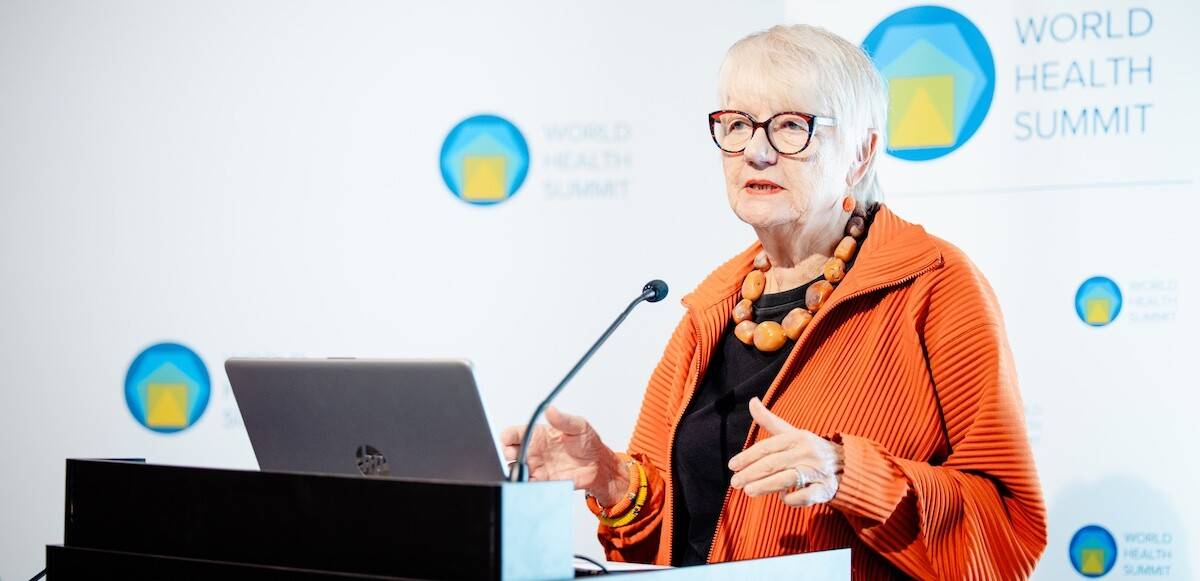
Billion health-related questions each day. How to handle them?
For Google, the challenge is to make trustworthy health information available at the scale and speed at which people seek answers online. Michael Howell, the company’s chief health officer, described years of collaboration with medical organizations and researchers to improve the quality of health information delivered through its services.
Google began supporting an expert panel from the US National Academy of Medicine to examine the principles of high-quality health sources on social media. The work involved WHO, the Academy of Medical Royal Colleges, and the Council of Medical Specialty Societies in the United States.
The company has since implemented approaches to elevating information from credible health sources in more than a dozen countries. The criteria are defined by relevant expert bodies rather than Google itself, he explained. Applying those criteria across multiple countries requires substantial engineering work.
Howell also pointed to research supporting the idea that information is a determinant of health. Google has invested in studies examining healthcare AI, including more than 300 scientific papers on AI quality in health.
The growing use of AI is changing the questions people ask. Google receives more than a billion health-related questions each day, Howell said. On average, 15% of the questions people ask Google Search each day have never previously been asked in human history, reflecting the enormous variety of language and individual concerns.
With AI-enhanced search, questions are now three times longer than before, he added. Conversational interfaces allow people to explore more nuanced concerns and discover questions they may not initially have known how to formulate. Howell sees this as an opportunity to respond to the specific circumstances in which people seek health information.
Yet producing reliable information is only part of the task. Howell argued that removing misleading content and promoting trustworthy material require distinct efforts.
“If all you do is go around and you know weed your garden, you end up with a patch of dirt,” he said. “You need to like plant some plants and water them and grow them.”
In practice, that means investing in useful, engaging content from credible sources. Howell acknowledged that trusted medical organizations often produce material that struggles to attract attention online. Effective health communication requires understanding how people consume information, including differences across regions, languages, and individual preferences.
“Health is not only a problem of knowledge. Health is a problem of action,” Howell said. Information that people cannot interpret or use offers limited practical value.
For Google, agreed principles can provide a common basis for implementation across services and countries. Howell explained that the company must respond when people ask health questions, making guidance on reliable sources and quality particularly important.
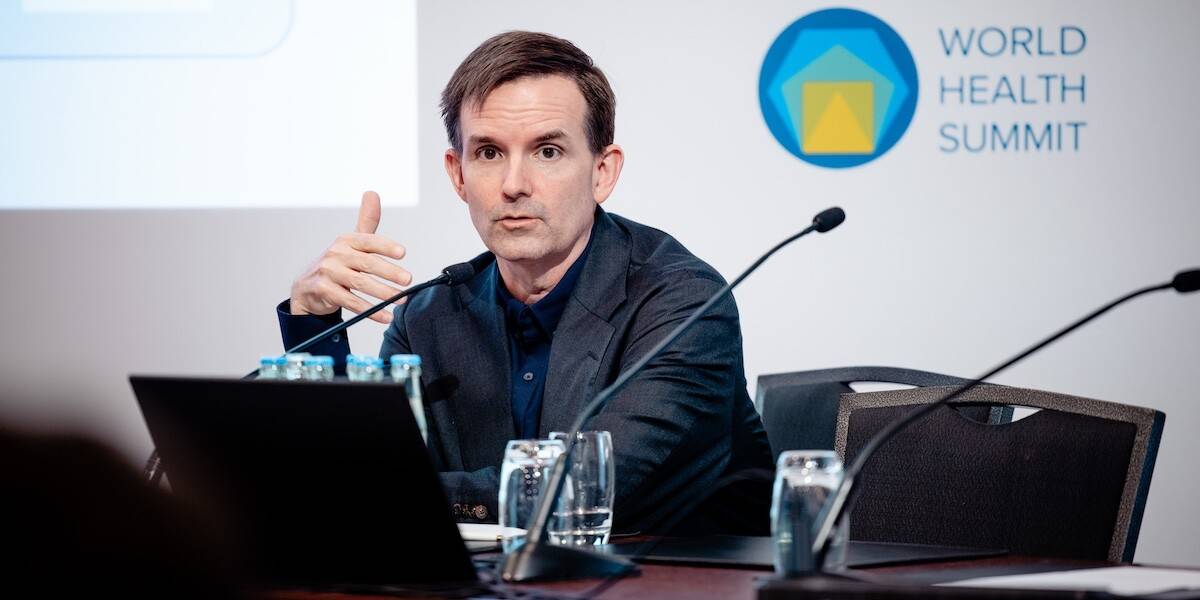
97 AI-generated profiles impersonating physicians
Scott Ratzan, co-chair of the Nature Medicine Commission on Quality Health Information for All, presented 5 guiding principles the commission developed: clarity, usability, accountability, ethics, and stewardship. Clarity requires clear definitions and responsibilities. Usability means making information accessible, understandable, and actionable. Accountability concerns transparency around sources and scientific evidence. Ethics calls for honest and proportionate communication, while stewardship addresses the governance of digital platforms, marketing, and AI as health information infrastructure.
Carolina Battista, the commission’s co-chair, illustrated the principles through the example of a parent seeking advice about vaccinating a child. Reliable information should explain the evidence, identify responsible actors, and communicate uncertainty. Systems must also allow investigation and correction of consequential errors.
Andrew Patterson, team lead for frontier technologies at WHO’s Department of Digital Health and Innovation, outlined three priorities for the organization: setting standards, checking that they remain practical and relevant as technology evolves, and helping institutions improve their content.
WHO is also working with a network of 1,200 healthcare creators known as FIDES (the name refers to the Roman goddess of trust and good faith). The creators receive information from the organization and develop content for their audiences. Patterson called for research to assess the effectiveness of such initiatives and identify approaches that others could adopt.
The challenges vary across countries. Anurag Agarwal, dean of the Trivedi School of Biosciences at Ashoka University, highlighted India's linguistic diversity, unequal access to healthcare and substantial out-of-pocket health expenditure. He argued that medical information needs to be developed in relevant languages from the outset.
“Just translating things does not work,” he said, warning that translation alone can introduce errors and fail to reflect local circumstances.
Carolina Battista described how misinformation has been used to deepen political polarization in Brazil and other parts of Latin America. The country's Ministry of Health recently reported identifying 97 AI-generated profiles impersonating physicians, she said. Such accounts can exploit institutional mistrust and reinforce concerns about vaccination through personalized conversations.
Bilel Jamoussi, deputy director of the Telecommunication Standardization Bureau at the International Telecommunication Union (ITU), described international work on standards for identifying the provenance and authenticity of digital content. The ITU can help establish common technical signals across platforms and countries, while appropriate organizations assess whether information is valid.
He suggested that international standards could help identify trustworthy information across different digital services, drawing inspiration from the Common Alerting Protocol used to distribute emergency warnings.
At the end of the session, Eckart von Hirschhausen, a prominent German physician, author and science journalist, raised the issue of AI-generated fake advertisements using his identity. More than 2,000 fake versions and deepfake videos featuring him are circulating online. He said he has never been involved in advertising throughout his career, yet AI-generated ads now falsely link him to products, threatening the credibility he has built over decades as a medical professional and science communicator.
Health misinformation undermines trust in healthcare and in the people working hard to keep us healthy. The consequences can be measured in health outcomes and, in many cases, lives lost.
References

Add ICT&health on Google
Show more content from ICT&health in Google Search.


